
Revision Hip Replacement Surgery
Planning And Blood Loss Management
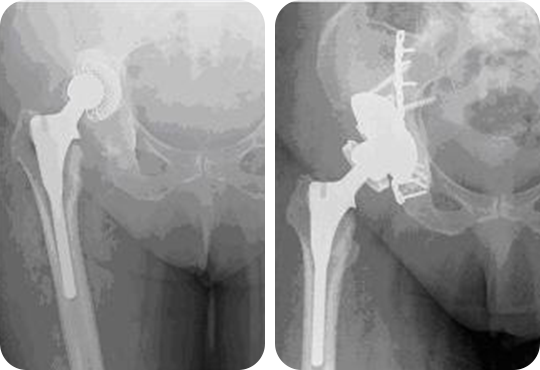
While pre-operative planning is important for all joint replacement surgeries, it is absolutely critical in revision hip surgery. Thorough planning ensures that multiple surgical options are available, allowing the surgeon to respond effectively to intraoperative findings.
Revision hip surgery typically involves a more extensive surgical approach and complex bone reconstruction, often resulting in greater blood loss compared to primary total hip replacement. To reduce the need for blood transfusions, a Cell Saver system is employed during the procedure. This technology allows for the collection, filtration, and reinfusion of the patient's own blood lost during surgery, thereby minimizing transfusion requirements.
Conditions Requiring Revision Hip Surgery
- The most common cause of failure nowadays is loosening of the one (commonly the socket component) or both components.
- Infected hip replacement that usually requires either one-stage or two-stage revision.
- Sometimes it is necessary to revise the hip because it is unstable and dislocates or slips out of the joint frequently.
- Relatively rarely, surgery may be required because of bone loss caused by particles generated from wearing down of the replacement. This condition is called osteolysis.
- Fracture around the implants, particularly on the femoral side usually requires revision of the implant.
Implants
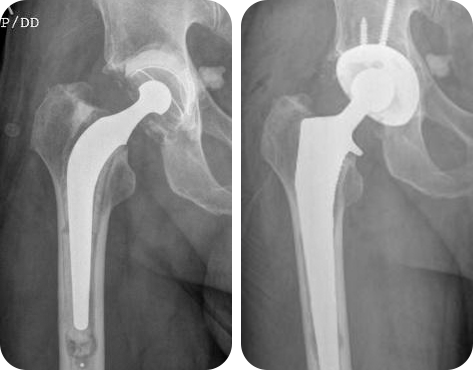
Femoral Components
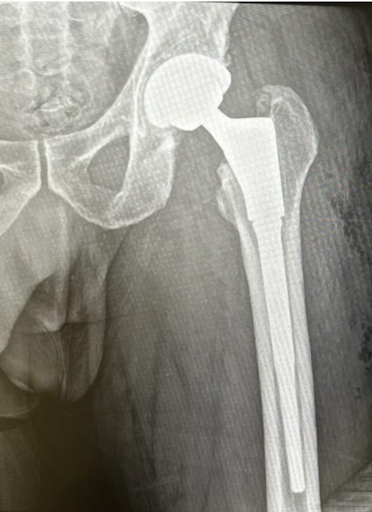
What To Expect From Revision Hip Replacement Surgery

Have questions about this service?
Contact our team for more information or to book a consultation.
Sarah Nixon (Secretary)